
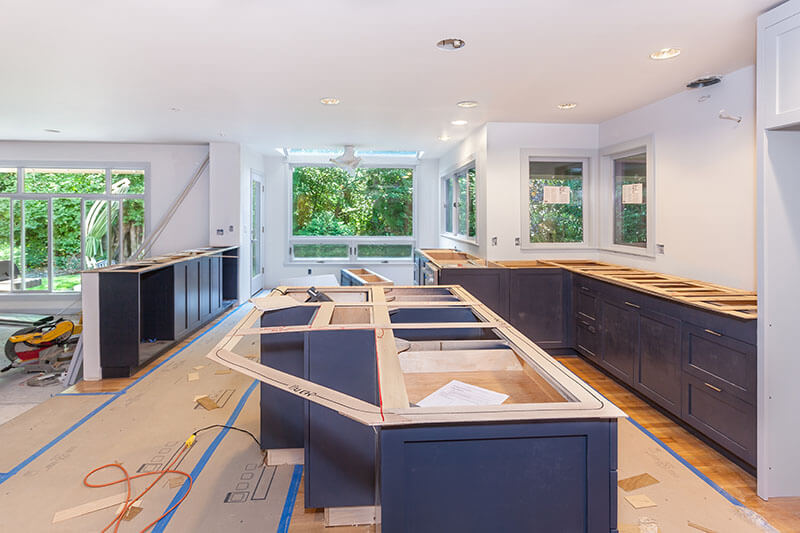
If you’ve spent any time in the Charlotte area lately, you’ve probably noticed it: half the neighborhood seems to be renovating. The dumpster in the driveway down the street. The contractor trucks parked outside the Lake Norman lakefront that’s getting a new kitchen. The Fort Mill new build that’s already adding a deck.
There’s a reason for all that sawdust. With interest rates where they’ve been, more than half of homeowners are now choosing to renovate rather than move — and the vast majority of them say they’re doing it to increase their home’s value, not just to chase a design trend.
But here’s the part nobody mentions while you’re scrolling renovation inspiration at 11 p.m.: not every project pays you back. Some renovations return more than double what you spend. Others quietly drain your budget and barely move the needle when it’s time to sell. And a few — we’ll get to those — can actually hurt your home’s value.
So before you swing a sledgehammer, let’s walk through what the data says about the best home renovation ideas for ROI, what buyers in fast-growing markets like ours actually pay a premium for, and how to spend your renovation dollars like someone who plans to get them back.
First, a Quick Word on How Renovation ROI Works
Return on investment is a simple idea: compare what a project costs to how much it adds to your home’s resale value. Spend $10,000 on a renovation that adds $9,000 in value, and you’ve recouped 90% of your cost — a 90% ROI. You enjoyed the upgrade and got most of your money back. Not bad.
Two caveats worth knowing before you budget. First, ROI estimates always come with a margin of variance. Your actual return depends on workmanship, material costs, how broadly appealing the result is, and what the market is doing when you sell. Second, there’s a useful guardrail called the 30% rule: avoid spending more than about 30% of your home’s current value on renovations. It keeps you from over-investing in a house the neighborhood can’t support — more on that trap later.
With that foundation laid (the only foundation work in this article, we promise), here’s where the money goes furthest.
The Renovations With the Highest ROI, Ranked
Each year, the Cost vs. Value Report analyzes renovation costs and resale returns across markets nationwide. Here’s how the top projects stack up:
| Renovation | Average Cost | Resale Value Added | ROI |
| Garage door replacement | $4,672 | $12,507 | 268% |
| Steel entry door replacement | $2,435 | $5,270 | 216% |
| Siding replacement (fiber-cement) | $21,485 | $24,420 | 114% |
| Minor kitchen remodel | $28,458 | $32,141 | 113% |
| Wood deck addition | $18,263 | $17,323 | 95% |
| Midrange bathroom remodel | $26,138 | $20,915 | 80% |
| Vinyl window replacement | $22,073 | $16,657 | 76% |
| Basement remodel | $52,012 | $36,905 | 71% |
A few of these deserve a closer look.
Curb Appeal: The Unglamorous ROI Champions
Nobody dreams about a garage door. And yet there it sits at the top of the list, returning more than double its cost — because in most homes, the garage door takes up 30 to 40% of the front facade. Replace a dated one, and you’ve transformed your home’s first impression for a fraction of what a kitchen costs.
The steel entry door tells the same story. It’s one of the first things a buyer touches, it signals that the home has been cared for, and it improves energy efficiency in the bargain. Research suggests strong curb appeal alone can lift a home’s value by around 7%.
And if your budget is more “fresh paint” than “full replacement”? That works too. A power wash, a repainted front door with new hardware, fresh mulch, and trimmed hedges deliver an outsized visual upgrade for a weekend’s effort. Think of landscaping like a haircut — the plants are there to frame your home, not hide it.
The Kitchen: Refine, Don’t Rebuild
Here’s where most renovation budgets go to die — and where the data offers a genuinely comforting answer. A minor kitchen remodel recoups more of its cost than a major one. You don’t need to gut the place.
Painted cabinets with new hardware. A midrange quartz or butcher block countertop replacing tired laminate. A cohesive set of matching appliances (matching matters more than top-of-the-line). New lighting and a backsplash you can install in a weekend. That’s the formula that returns over 100%.
The kitchen earns this attention because it carries enormous weight in a home’s perceived value — appraisers estimate it accounts for 10 to 15% of the total. One warning, though: resist the urge to steal space from neighboring rooms for a bigger island. A gorgeous, enormous kitchen next to a dining room that can no longer fit the Thanksgiving table reads as a flaw, not a feature. Buyers notice flow.
Bathrooms, Decks, and the Spaces in Between
A midrange bathroom refresh — new fixtures, updated vanity, a large modern mirror, freshly caulked tile — returns about 80% of its cost. Buyers inspect bathrooms almost as closely as kitchens, and the winning vibe is “spa retreat,” not “fortress.” Let the natural light in. If you can add a half bath, that’s one of the strongest value moves available.
Outdoor living has been a priority for buyers ever since 2020 turned everyone’s backyard into a second living room, and that hasn’t changed around here. Whether it’s a deck overlooking your slice of Huntersville or a patio built for Carolina spring evenings, outdoor space effectively extends your square footage — 86% of buyers say they want a patio. A wood deck returns roughly 95% of its cost.
Energy efficiency is the quiet performer in this category. Vinyl window replacement returns about 76% while cutting the energy bills that come with our humid Charlotte summers (windows account for 25 to 30% of a home’s heating and cooling loss). And blown-in attic insulation — possibly the least glamorous project in this entire article — frequently recoups over 100% of its cost.
What Buyers Will Actually Pay a Premium For
ROI tables tell you what appraisers credit. Buyer behavior tells you what wins bidding wars. Real estate agents who track feedback across thousands of showings report a remarkably consistent wish list: an upgraded kitchen, a spa-like primary bath, an open and functional floor plan, abundant natural light, and a home that’s genuinely move-in ready.
Notice what else keeps appearing on that list: storage. Buyers walk through a home mentally placing their belongings — and a walk-in closet with a real organization system, a pantry that actually holds the Costco run, and a garage you can park in all register as premium features. In a fast-growing market like greater Charlotte, where families are arriving constantly and square footage comes at a premium, smart storage isn’t a nice-to-have. It’s one of the features buyers remember after a long day of showings.
That’s something our team sees firsthand. A custom storage solution transforms how a home lives day to day — calmer mornings, easier routines — and it photographs beautifully when the listing goes live. (If you’re curious what that could look like in your closet, pantry, or garage, a free design consultation is an easy place to start.)
Buyers also pay premiums for updated major systems — HVAC, roof, water heater, electrical — because nobody wants to inherit a five-figure surprise in year one.
What Appraisers Give Extra Credit For
Appraisers look at your home differently than buyers do. Their guiding question is maintenance: has this home been kept up, and what will it cost the next owner to keep it that way? The items they reward reflect that — a new electrical panel, a new water heater, energy-efficient windows, new flooring, a new fire-resistant roof, a new HVAC system, and professionally applied neutral paint.
Two details worth flagging. Solar panels add appraised value only when they’re paid off — leased panels don’t count, and can even complicate a sale. And that DIY paint job you did in a bold accent color? Appraisers consistently reward neutral tones done like a pro. The one place buyers and appraisers fully agree: a refreshed kitchen is the single most cost-effective value driver in the house.
The Renovations That Can Hurt Your Home’s Value
Now for the cautionary tales. Upscale primary suite additions return as little as 24 to 36% of their cost — the more luxurious the addition, the worse the math. Upscale bathroom additions follow the same curve. Garage conversions are a particular heartbreaker: you gain living space, but most buyers want the garage back (and around here, covered parking and storage space are not features people give up gladly). Swimming pools are climate-dependent and often read as a maintenance and insurance burden rather than a bonus.
But the single biggest mistake is overimproving for your neighborhood. If homes on your street sell for $400,000, no renovation will make yours appraise at $600,000 — there are no comparable sales to support it, and even a willing buyer’s lender can overrule the appraisal. You want the nicest house on the block, not a castle surrounded by cottages. Before any major project, look at your comps, and consider asking a couple of local agents whether the investment makes sense for your specific street.
How to Prioritize Your Renovation Budget
When everything on this list sounds appealing, here’s a sensible order of operations. Safety and structure come first: roof, foundation, electrical, plumbing. A new garage door won’t help you if the roof above it leaks.
From there, start with low-disruption, high-return projects — doors, windows, paint, insulation, closet and storage upgrades — before committing to the high-disruption remodels like kitchens and baths that take weeks and turn your home into a job site. And throughout, keep your spending anchored to your neighborhood’s ceiling. The goal is a home that delights you now and pays you back later.
Frequently Asked Questions
What home improvement adds the most value?
Garage door and steel entry door replacements deliver the highest percentage returns, often exceeding 200%. For interior projects, a minor kitchen remodel is the most reliable value driver, returning over 100% of its cost on average.
What renovations don’t add value to a house?
Upscale additions, luxury bathroom upgrades, garage conversions, and pools typically return well under half their cost. Any project that pushes your home’s value far above your neighborhood’s comparable sales is unlikely to pay off.
What is the 30% rule for renovations?
It’s a guideline suggesting you avoid spending more than 30% of your home’s current value on renovations. It protects you from over-investing beyond what your local market can support.
Do storage upgrades add resale value?
Yes — buyers consistently rank storage among their top priorities, from walk-in closets with organization systems to functional pantries and garages. Storage upgrades also tend to be low-disruption compared to kitchen and bath remodels, making them an efficient way to add appeal.
Is $50,000 enough to renovate a house?
For curb appeal projects, a bathroom refresh, new entry doors, storage solutions, and cosmetic updates — absolutely. Whole-home renovations or structural changes will typically cost significantly more.
The Bottom Line: Renovate for Value and for Life
The smartest renovations do two jobs at once. They make your home worth more on paper, and they make it genuinely better to live in — calmer mornings, easier routines, a place that feels good to come back to after the Charlotte commute.
Curb appeal, a refreshed kitchen, energy efficiency, and the kind of smart storage buyers remember: that’s the playbook. And if reclaiming your closets, pantry, or garage is where you’d like to start, our team would love to help. Schedule a free design consultation with Impeccable Closets, and let’s talk about what your space could become.